 Jing Bearing
What Should You Do If Your Excavator's Slewing Bearing Develops Abnormal Noises ?
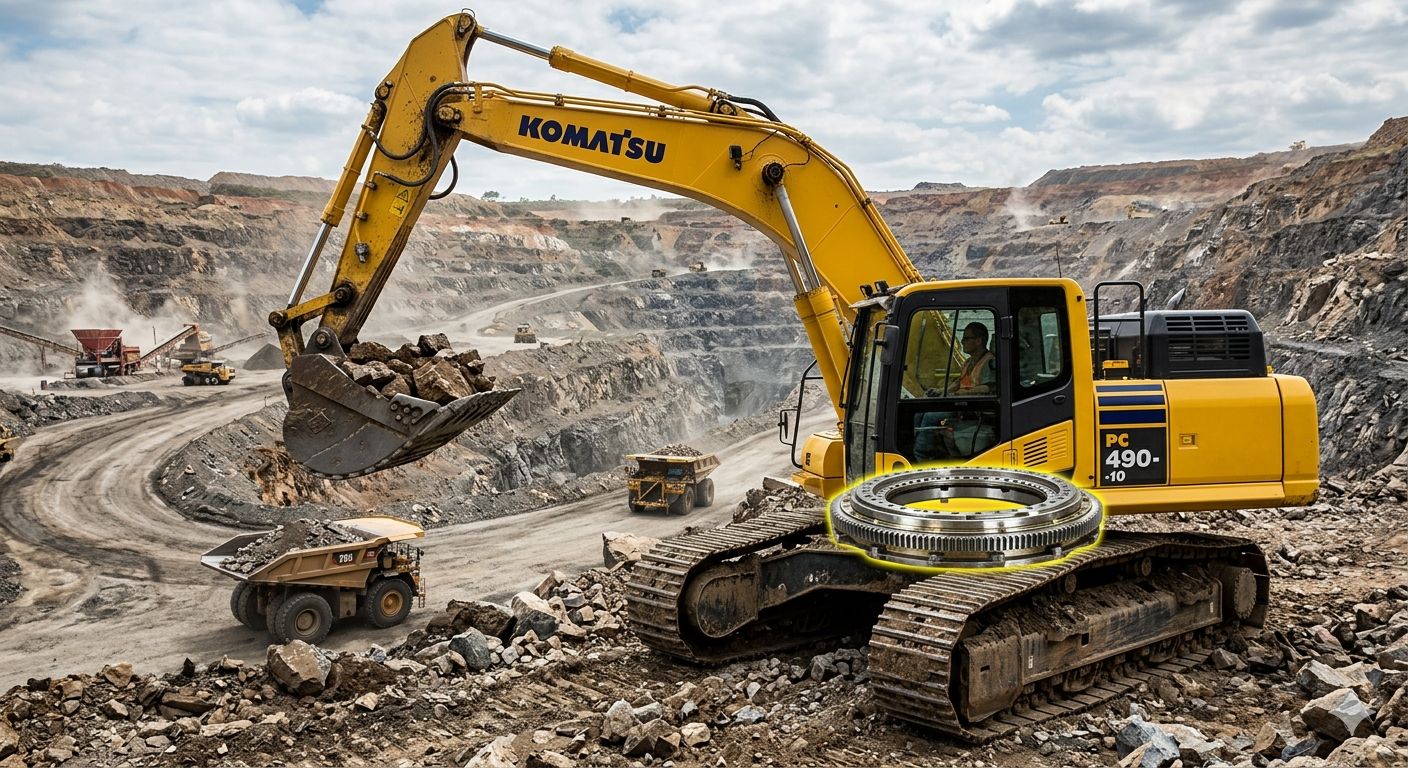
If an excavator's slewing bearing begins to make abnormal noises, the first step is to identify the type and severity of the sound. If the noise is faint and uniform—particularly right after installation or maintenance—it is usually a sign of normal "break-in" wear or the grease distributing itself evenly; this type of noise will likely disappear on its own after a period of operation. However, if you hear loud, jarring, or irregular noises—such as "squeaking" or "clicking" sounds—you must immediately shut down the machine to troubleshoot the issue. Failure to do so could result in severe damage or even render the slewing bearing completely unserviceable.
The following troubleshooting steps are listed in order of urgency:
1. Perform Basic Checks (The most common and easiest issues to resolve)
• Check and Replenish Grease: This is the most common cause of abnormal noise. Insufficient grease in the raceway, degraded grease, or uneven grease distribution can all lead to noise. If this is the problem, the noise will typically subside quickly after replenishing or replacing the grease with a high-quality lubricant.
• Check Mounting Bolts: Inspect the bolts connecting the slewing bearing to both the upper and lower frames to ensure none are loose. If any loose bolts are found, they must be immediately tightened to the manufacturer's specified torque. Loose bolts can cause the bearing structure to deform, leading to abnormal internal clearances and, consequently, noise.
2. Conduct In-Depth Mechanical Inspections
If the abnormal noise persists after completing the basic checks, you must investigate the following areas:
First: Abnormal Gear Meshing or Broken Teeth.
Typical symptoms of this issue include extremely jarring noises, uneven rotation, and even a distinct sensation of "catching" or stalling during movement. The remedy involves immediately inspecting the engagement between the slewing reducer's pinion gear and the slewing bearing's large ring gear, and removing any foreign objects found in the meshing zone. If any broken teeth are discovered, you must contact a qualified professional to perform repairs or replace the damaged components.
Second: Internal Foreign Objects or Damaged Seals.
In this scenario, the abnormal noise is often intermittent and irregular, and the rotation may be accompanied by a slight sensation of hesitation or "bumping." The remedy involves checking the sealing strips for signs of aging or damage. If the seals have failed, allowing foreign objects to enter the raceway, it will cause accelerated wear on both the rolling elements and the raceway itself. This issue requires a qualified professional to disassemble the unit for cleaning and to replace any damaged seals or rolling elements. Third: Severe wear of the rolling elements or raceway.
This represents a relatively serious situation. The typical abnormal noise is a dull, periodic "thud" or "clunk," often accompanied by noticeable shaking or vibration of the vehicle body. The recommended course of action is as follows: This condition usually indicates that the slewing bearing has sustained severe damage. Generally, it requires either the direct replacement of the entire slewing bearing assembly or a major overhaul performed by a specialized company (involving the replacement of components such as steel balls, spacers, etc.). Attempting to resolve this issue yourself is not recommended.
3. Troubleshooting Methods and Maintenance Guidelines
Based on the severity of the fault, troubleshooting methods are categorized into three levels:
3.1. Routine Maintenance Level (Self-Service): Regularly apply the specified grade and quantity of lubricant (grease), and inspect and tighten all connecting bolts to the prescribed torque specifications.
3.2. Professional Repair Level (Requires Specialized Personnel): If there is any suspicion of internal foreign objects, damaged seals, or minor gear wear, operations should cease immediately. Contact professional maintenance personnel to perform an on-site diagnosis or return the unit to the manufacturer for repair, thereby preventing minor issues from escalating into major failures.
3.3. Major Overhaul or Replacement Level (Requires Professional Assessment): If the raceway or rolling elements have sustained severe wear, directly replacing the entire slewing bearing assembly is typically the more economical and time-efficient option. Although theoretical repair is possible, it demands highly specialized technical expertise and hard-to-find spare parts; furthermore, the effectiveness and service life of a repaired unit cannot be guaranteed.
Special Reminder: When reinstalling the slewing reducer following maintenance or repair, never attempt to force the bolts tight. You must carefully fine-tune the position of the turntable to ensure that the pinion gear properly meshes with the large ring gear before tightening the bolts; otherwise, gear stripping (damage to the gear teeth) is highly likely to occur.
The core principle for addressing these issues is "start simple, then move to the complex; check the exterior first, then the interior." Begin with routine maintenance steps—such as applying grease and checking the bolts—as the vast majority of abnormal noise issues can be resolved through these two steps alone. If the problem persists, proceed to further diagnose potential gear damage or internal wear to prevent minor glitches from evolving into major mechanical failures.
If you can provide a more specific description of the sound (e.g., a "squeak" versus a "click" or "clack") and the accompanying symptoms (e.g., whether or not there is any shaking/vibration), I can assist you in making a more accurate diagnosis.
 Jing-Bearings Bearing