 Jing Bearing
Do slewing bearings require regular cleaning?
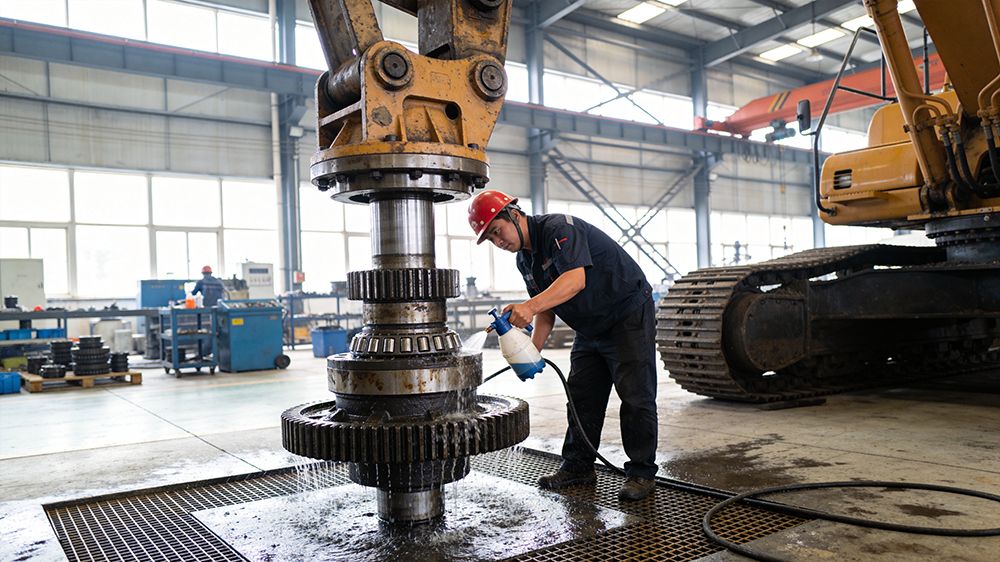
Slewing bearings require periodic cleaning. However, "cleaning" in this context does not primarily refer to rinsing the entire bearing with water; rather, it refers to specific removal operations targeting two critical areas: the gear teeth surfaces and the sealing strips.
The purpose of cleaning is to prevent debris from accelerating wear, damaging seals, or causing lubrication failure; however, improper procedures can actually lead to further problems.
Regarding the two core areas involved in slewing bearing cleaning operations:
1. Gear Teeth Surfaces:
Reason for Cleaning: To prevent sand, gravel, welding slag, hard objects, and similar debris from entering the gear mesh zone, thereby avoiding issues such as gear binding, gouging, or abnormal wear.
Recommended Method: After periodically removing debris, apply fresh grease or rust-inhibiting oil for protection.
Important Note: This is a mandatory daily maintenance task that must not be overlooked.
2. Sealing Strips:
Reason for Cleaning: To remove surface contaminants and prevent foreign objects from being forced into the internal raceway.
Recommended Method: Clean the area surrounding the sealing strips whenever seals are being replaced or inspected.
Important Note: Exercise gentleness during cleaning to avoid damaging the sealing lips.
Regarding the two major prohibitions to observe during cleaning:
1. Strictly Prohibited: Direct flushing with high-pressure water jets or steam.
Reason: Powerful water pressure can force open the sealing strips, allowing moisture and impurities to enter the raceway. This leads to the emulsification and failure of the lubricant, and may even trigger internal corrosion.
Operational Advice: If the equipment requires large-area washing, you must carefully avoid the slewing bearing connection points. Should the bearing inadvertently be exposed to water flushing, immediate re-lubrication is mandatory.
2. Avoid Using Inappropriate Cleaning Agents:
Reason: Strong or non-neutral cleaning agents can corrode the seal materials or seep into the raceway, compromising the performance of the lubricant.
Recommended Choice: If it is necessary to remove stubborn surface oil stains or rust-inhibiting coatings, the use of biodegradable alkaline cleaning agents is recommended.
The Two Major Prohibitions to Observe During Cleaning
1. Strictly Prohibited: Direct flushing with high-pressure water jets or steam.
Reason: Powerful water pressure can force open the sealing strips, allowing moisture and impurities to enter the raceway. This leads to the emulsification and failure of the lubricant, and may even trigger internal corrosion. Operational Advice: If the equipment requires extensive washing, you must take care to avoid the connection points of the slewing bearing. Should these areas inadvertently be exposed to water, immediate re-lubrication is mandatory.
2. Avoid Using Inappropriate Cleaning Agents
Reason: Strong or non-neutral cleaning agents may corrode the seal materials or penetrate the raceway, thereby compromising the performance of the grease.
Recommended Choice: If you need to remove stubborn oil stains or rust-preventive coatings from the surface, the use of a biodegradable alkaline cleaner is recommended.
In summary, the proper philosophy regarding cleaning can be distilled into this principle: frequently remove debris, but avoid aggressive high-pressure water washing.
During routine maintenance, it is generally sufficient to periodically remove debris from the gear teeth and wipe down the surface of the sealing strip. Additionally, a crucial aspect of the cleaning regimen involves regularly inspecting the sealing strip to ensure it remains intact—checking specifically for any signs of detachment or damage.
Regular and thorough lubrication (greasing) serves, in itself, as a vital method of both cleaning and protection; as fresh grease extrudes past the sealing strip, the resulting grease collar effectively prevents external contaminants from entering the bearing.
If you require specific guidelines for cleaning and maintenance under particular operating conditions (such as in dusty mining environments or humid port settings), please provide me with the details of your specific scenario, and I will be happy to offer a more t
- previous:Slewing Bearings for Port Ship Unloaders:(2026/5/12)
- next:What Should You Do If Your Excavators Slewing Bearing Develops Abnormal Noises ?(2026/5/15)
 Jing-Bearings Bearing