 Jing Bearing
What are the differences in operating temperatures for slewing bearings made of different materials?
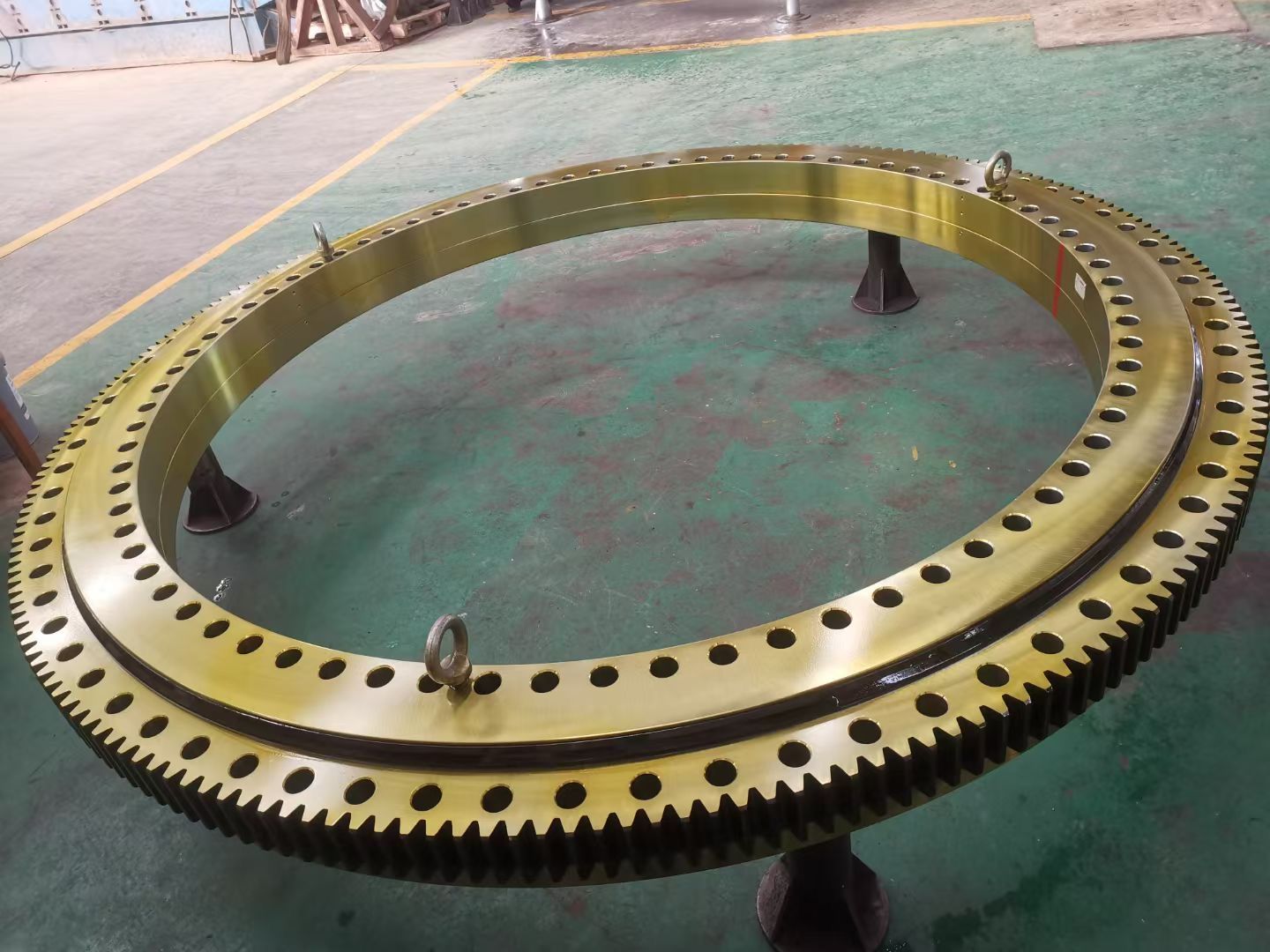
For slewing bearings of different materials, variations in their operating temperature ranges are primarily determined by a combination of the ring material, rolling element material, seal material, and lubricant grease. Among these, conventional steel slewing bearings offer the widest general operating range, while specialized materials (such as plastics or stainless steel) provide specific advantages tailored to extreme environments.
The following is a comparison of the operating temperatures for slewing bearings made from various materials:
1. Conventional Steel Slewing Bearings
• Typical Materials: Rings typically utilize 50Mn or 42CrMo steel, while rolling elements commonly use GCr15 steel.
• Operating Temperature Range:
Standard Design: Approximately -20°C to +70°C.
Wide-Temperature Design (via special heat treatment): Approximately -40°C to +150°C.
• Key Features and Applications: Classified as a general-purpose type with the broadest range of applications. The operating range can be extended through special heat treatments (such as high-temperature tempering) and the selection of lubricants resistant to both high and low temperatures; this makes them suitable for most engineering machinery, wind power equipment, and other standard or wide-temperature applications.
2. Engineering Plastic / Composite Material Slewing Bearings
• Typical Materials: High-strength aluminum alloy inner and outer rings, paired with wear-resistant, self-lubricating sliding elements (such as TEFPLAS®).
• Operating Temperature Range: Approximately -200°C to +250°C.
• Key Features and Applications: Characterized by an ultra-wide temperature adaptability and maintenance-free operation. The self-lubricating design requires no grease, enabling operation in harsh environments involving extreme heat or cold; they are frequently used in clean or specialized environments such as the food processing, medical, and semiconductor industries.
3. Stainless Steel Slewing Bearings
• Typical Materials: Stainless steel rings, with rolling elements commonly utilizing materials such as GCr15SiMn.
• Operating Temperature Range: Approximately -40°C to +150°C (comparable to the wide-temperature design of conventional steel bearings).
• Key Features and Applications: The primary advantage is corrosion resistance, making them suitable for wet or corrosive environments found in marine engineering, shipbuilding, and the chemical industry. Their operating temperature range typically aligns closely with that of wide-temperature products made from specially treated conventional steel. Additionally, the material of the seals requires special attention: standard Nitrile Rubber (NBR) typically withstands temperatures ranging from approximately -30°C to +120°C; low-temperature Silicone Rubber or high-temperature Fluorocarbon Rubber (FKM) can accommodate even lower or higher temperatures. When selecting a component, the seal material's temperature range should generally be matched to the operating temperature range of the supporting structure.
How should one make a selection based on different operating conditions?
1. Standard Conditions:** For general environments ranging from -20°C to +70°C, selecting a slewing bearing made from standard steel materials (50Mn/42CrMo + GCr15) represents the most economical and reliable choice.
2. High/Low-Temperature Environments:** If the equipment is required to function normally in extremely cold regions at -40°C or in high-temperature environments reaching 150°C, it is imperative to specify a "wide-temperature design" to the manufacturer. This typically entails:
Applying special heat treatments (such as high-temperature tempering) to the raceways and rolling elements.
Substituting standard lubricants and seals with variants capable of withstanding extreme high and low temperatures.
3. Extreme Environments:** If the operating temperature falls outside the aforementioned ranges (e.g., below -40°C or above 150°C), or if the application demands a completely maintenance-free, self-lubricating solution, then a slewing bearing constructed from engineering plastics or composite materials would constitute a superior solution.
4. Corrosive Environments:** In settings characterized by high humidity or exposure to chemical corrosion, priority should be given to slewing bearings manufactured from stainless steel.
Therefore, when making a selection, it is essential to provide specific details regarding the type of equipment being used as well as the maximum and minimum operating temperatures; this will enable me to provide you with more tailored and precise selection recommendations.
 Jing-Bearings Bearing